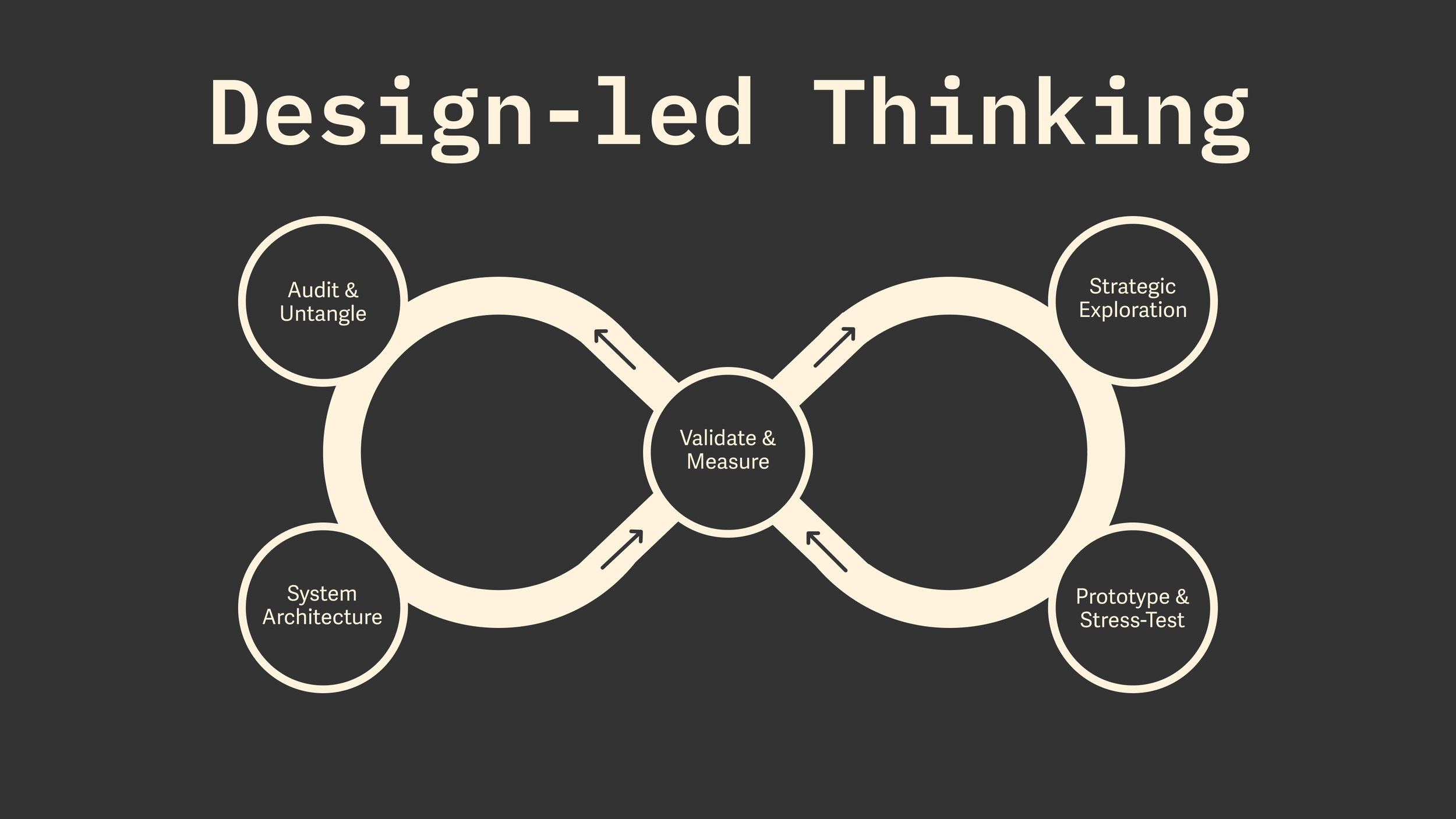
Bridging Strategy & Execution
The Adaptive Framework
For every project I lead, I employ a proven, iterative framework designed to deliver consistent and impactful outcomes. In an Agile environment, the theory is a circle, but the reality is a flexible toolkit. I adapt the fidelity and speed of each phase to match the risk profile of the release, ensuring we move fast without sacrificing the core system’s integrity.
Collaborative Orchestration
Design doesn't happen in a vacuum. I work in lockstep with Product and Engineering stakeholders from discovery to delivery. By integrating stakeholder alignment and technical feasibility checks early in the process, I de-risk the roadmap and ensure that our design solutions are not only ambitious but buildable and aligned with business goals.
Device Agnostic Design
I believe a product should be as powerful as the platform it lives on. Rather than a "Mobile-Only" or "Desktop-First" approach, I design with a device-agnostic philosophy. I focus on the core user journey, then allow each platform—be it mobile, tablet, or desktop—to shine by leveraging its unique strengths. The user should feel a seamless transition across the ecosystem, with a UI that feels native and optimized regardless of where they navigate.